I threw together a batch of butterscotch brownies this evening, because, hey, I had some time and I was almost out of macaroons. But get this, the salt container is nearly empty.
My usual method of purchasing salt goes like this:
1. Move at least 250 miles
2. Buy salt
...because you don't move salt. The container is so large and the cost so small, it makes no sense.
But I've been here four and a half years, and I've nearly used up the salt.
I don't think moving 250 miles is practical at this point, though honestly, every time someone quotes that "Pittsburgh has been named the worst city to be single in" stuff at me, every time I try to get the courage to start applying to jobs again, I think maybe moving would not be the worst idea. Except those articles usually are about being 18-24 and going to bars a lot, and the jobs aren't much of anywhere, even if I did know what job I wanted to do.
Four and a half years feels pretty long to me. I made it five years in both Tacoma and New York. Tacoma was a hundred million years ago with college and no need to decide what to do with myself just yet. New York, I had a secure job that I believed in, even if the manifestation wasn't always what I wanted it to be.
I am still kicking myself, even though it was the decision I needed to make at the time.
I wish I could just write "salt" on my shopping list and have that be all.
But hey, brownies. I don't know where my mother got the recipe, but they were my favorite when I was a kid, probably because I was the only one who liked them.
Melt 1/4 c. butter
Stir 1 c. brown sugar into it.
Cool slightly.
Beat in 1 egg and 1 tsp. vanilla.
Stir in 1/2 c. flour, 1 tsp. baking powder, 1/2 tsp. salt.
Bake in a 9x9 pan at 350 for 20-25 minutes.
Monday, April 23, 2012

Monday, April 9, 2012
Tapas
The word of the week is tapas. Ironically this was chosen a bit lazily, as it was on the back of the card with last week's word. Tapas is variously translated as fire, heat, burning enthusiasm. Something I have been lacking lately, so I decided it was the right word.
Well, not so much lacking as I have been overwhelmed, running from one thing to the next, constantly, not having enough time to simply sit and be. In some ways this flurry of activity is good, because it keeps me from thinking too much about those things that I can't change, or don't yet know how to change. But feeling tired and overwhelmed is not good.
And so in the midst of a week when I was supposed to be thinking about burning enthusiasm, I skipped those things that I supposedly feel the most enthusiasm for -- dance and yoga -- and sat at home weeding the peonies.
Which, as it turns out, is another thing for which I have burning enthusiasm.
What I've learned about tapas this week is that it's not just doing things with enthusiasm -- it's finding the things for which I have the most enthusiasm, and making sure I do those things as well as the things which I "have to do" (like work, and clean the bathroom -- both things that bring benefits that I want to experience, but not things I would define as "enjoyable").
That brings me back to a poem by David Whyte I first heard in a movement workshop at Kripalu. The poem ends
Well, not so much lacking as I have been overwhelmed, running from one thing to the next, constantly, not having enough time to simply sit and be. In some ways this flurry of activity is good, because it keeps me from thinking too much about those things that I can't change, or don't yet know how to change. But feeling tired and overwhelmed is not good.
And so in the midst of a week when I was supposed to be thinking about burning enthusiasm, I skipped those things that I supposedly feel the most enthusiasm for -- dance and yoga -- and sat at home weeding the peonies.
Which, as it turns out, is another thing for which I have burning enthusiasm.
What I've learned about tapas this week is that it's not just doing things with enthusiasm -- it's finding the things for which I have the most enthusiasm, and making sure I do those things as well as the things which I "have to do" (like work, and clean the bathroom -- both things that bring benefits that I want to experience, but not things I would define as "enjoyable").
That brings me back to a poem by David Whyte I first heard in a movement workshop at Kripalu. The poem ends
anything or anyone
that does not bring you alive
is too small for you.
Remembering this every day, with every choice I make about how to spend my moments.
Monday, March 26, 2012
On meeting yourself where you are
In the fall of 2010, my school had an ice-skating event.
I'm from Southern California. In other words, I don't ice skate. I've been skating maybe half a dozen times in my life, unlike these Pennsylvania natives who have skated on actual frozen lakes.
I'm from Southern California. In other words, I don't ice skate. I've been skating maybe half a dozen times in my life, unlike these Pennsylvania natives who have skated on actual frozen lakes.

My student, Justin, zipped back and forth, cutting across the ice, unafraid of the vast open center of the rink. My coworkers skated around, talking, turning, stopping with ease. I like to try things, I thought. And work is paying for it. I'll get a pair of skates. I'm sure I can do this.

Justin, a hockey player, laughed at me as I nervously gripped the edge and inched my way around the rink. Another teacher, Brandon - who is not a small man - was new at skating too. He valiantly attempted to skate - with the aid of a walker-type contraption, the likes of which I'd never seen. Of course it was sized for children, so he was bent over it uncomfortably. He was a sight! But he trudged on, uncaring how he looked and enjoying himself immensely.
On my fourth tortured creep around the rink, as I ventured away from the wall a little more, I fell and twisted my ankle. When I finally conceded to go to a doctor, I learned it was a sprain.
I don't yet know how to ice skate. I know that now. It's not that it's wrong to poke at your limits - in fact, it's the only way we ever learn anything new. But by accepting our limitations, and accepting the help that is available to us, we stay safe from injury. We may be too proud to use a wall to steady our balance in Vrkasana (Tree Pose), or insist that our hands can reach the floor without a block in Trikonasana (Triangle Pose). We don't admit that we need to look up that word we don't know, or insist that we can carry all the bags to the front door in one trip. We fail to accept the help that is available out of pride, or the fear of seeming weak.
But the figure of Brandon scooting around behind that undersized "ice skating training aid" reminds me that there is strength in seeing the help that is available and in not being afraid to use it. To say "this is where I am today, and I'm okay with that."
But the figure of Brandon scooting around behind that undersized "ice skating training aid" reminds me that there is strength in seeing the help that is available and in not being afraid to use it. To say "this is where I am today, and I'm okay with that."
Saturday, March 24, 2012
The power of letting go
Four summers ago at outdoor yoga, I was first introduced to the idea of headstand.
At the time, headstand was this thing. This goal. This unattainable, top-of-Mount-Everest goal that I thought I would never achieve. Oh, sure, I tried the little egg preparation. I decided that was as far as I could go, as far as I needed to go. It gave me the feeling of being upside down without the vulnerability.
I didn't practice headstand for three years. I practiced with my hands in a tripod with my head and rested my knees on my elbows, and that was my headstand. And it's a fine pose and gives all the benefits and keeps you safe.
And then things started to change. I changed. I discovered social dancing, I opened my mouth about things I didn't like at work, I lost my job. I went into a deep depression. I wanted to feel strong again, so I started doing the Five Tibetans, which are these great exercises that align the chakras and strengthen the core and made me feel so strong and confident. I horsed around, showing kids at the daycare how to start a headstand with that little egg. And before I knew it, my feet were floating up.
I was shocked and scared. My knees came right down to my elbows again and I couldn't get them to lift. This went on for a while.
And then another day, I was putting a sequence together for a friend, and thought, well, some kind of inversion on the end would make sense.
So there I went, into my little egg, and my feet floated all the way up.
I was, of course, so shocked that I fell over.
But there it was - headstand. Something I'd let go of so thoroughly that I didn't even want it. It suddenly appeared.
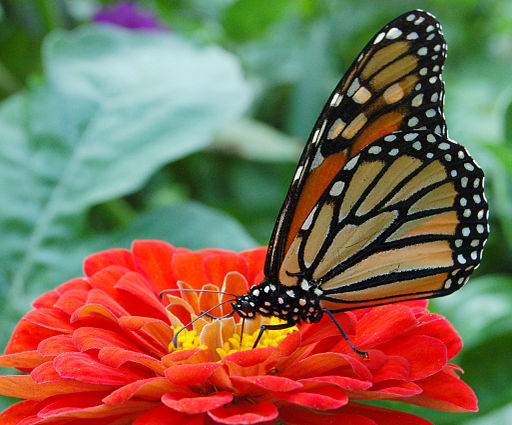
When I was a child, my grandparents had a framed poster on their wall with a picture of a monarch butterfly. The quotation at the bottom was
At the time, headstand was this thing. This goal. This unattainable, top-of-Mount-Everest goal that I thought I would never achieve. Oh, sure, I tried the little egg preparation. I decided that was as far as I could go, as far as I needed to go. It gave me the feeling of being upside down without the vulnerability.
I didn't practice headstand for three years. I practiced with my hands in a tripod with my head and rested my knees on my elbows, and that was my headstand. And it's a fine pose and gives all the benefits and keeps you safe.
And then things started to change. I changed. I discovered social dancing, I opened my mouth about things I didn't like at work, I lost my job. I went into a deep depression. I wanted to feel strong again, so I started doing the Five Tibetans, which are these great exercises that align the chakras and strengthen the core and made me feel so strong and confident. I horsed around, showing kids at the daycare how to start a headstand with that little egg. And before I knew it, my feet were floating up.
I was shocked and scared. My knees came right down to my elbows again and I couldn't get them to lift. This went on for a while.
And then another day, I was putting a sequence together for a friend, and thought, well, some kind of inversion on the end would make sense.
So there I went, into my little egg, and my feet floated all the way up.
I was, of course, so shocked that I fell over.
But there it was - headstand. Something I'd let go of so thoroughly that I didn't even want it. It suddenly appeared.
When I was a child, my grandparents had a framed poster on their wall with a picture of a monarch butterfly. The quotation at the bottom was

Happiness is like a butterfly: the more you chase it, the more it will elude you, but if you turn your attention to other things, it will come and sit softly on your shoulder.
-- Henry David Thoreau
Which may actually be from Nathaniel Hawthorne, according to the wisdom of the internet.
I had a challenge this past week - owing to a situation that made me uncomfortable, in a place where I was previously comfortable, I had to go someplace new.
Last week I could have gone, but I couldn't quite see it. I went out in the yard and took my meditation there, among the new crocuses and burgeoning weeds.

Within five minutes of closing my eyes I knew that it didn't matter. That whatever decision I made would be okay, that I was deciding between going dancing and going to yoga that night, and either decision would be a thing I wanted to do and either thing would end up being the right thing to do and the thing I most needed to do. I knew that I would try the new dance studio when I was ready, and that I needed to let myself need it, and then I would be ready.

Within five minutes of closing my eyes I knew that it didn't matter. That whatever decision I made would be okay, that I was deciding between going dancing and going to yoga that night, and either decision would be a thing I wanted to do and either thing would end up being the right thing to do and the thing I most needed to do. I knew that I would try the new dance studio when I was ready, and that I needed to let myself need it, and then I would be ready.
This week I wanted to dance so badly, I knew it was time to be ready. I was nervous. My stomach started feeling uneasy around noon. I checked the information over and over again, wondering if the week I picked to go would be the week it was cancelled for mysterious reasons. I was shaking when I walked through the door, even though I knew there would be at least a couple familiar faces there.
There were more than a few - it was nearly the same crowd. I was recognized, welcomed, even used for a demo as the other instructor fiddled with the music. It's different there, a smaller crowd, a different floor, a different vibe. But it's all right. It keeps me dancing. I let go of pushing myself, and I floated to where I needed to be, just as my feet floated up to point at the ceiling.
Saturday, March 17, 2012
Armor
I have this new coworker. He's a misery.
He doesn't know he's a misery, though. He's one of those very old-school types who thinks that mild insults are a way of showing affection - and that showing this kind of affection is appropriate in an office setting. He reminds me of a newspaperman from the 30s in shirtsleeves, with a cigar burning on the desk and a glass of whisky within reach.
He swears far more than is necessary, talks angrily to his computer, sings, whistles, coughs, comments on everything even if it is just to repeat what someone else said, and just generally seems to need a great deal of attention.

It's very hard to not be annoyed by this guy, and certainly even harder to try to muster up some compassion for him.
At first I thought, perhaps it's just me; I didn't like my other coworker very much when he started and I've come to be able to see that he means well, even though he tries too hard. When this coworker started talking about the new coworker to me, though, I was able to let go of thinking it was just me, and that I had to resist this overly negative person, and try to gain some perspective and some compassion for this person who I find myself offended by daily.

My affable coworker referred to the other guy's mannerisms as armor that he carries around with him. And it is; it's armor that keeps people from liking him, armor that keeps people at a distance. Armor that he probably doesn't even know he's carrying.
Cyndi Lee reminds us that the warrior's weapons are "precision, gentleness, opening, and natural intelligence." One look at any of the warrior poses (Virabhadrasana) shows this to be true.

There's nothing in that stance about fighting, closing off, sending others away. The warrior is open to the challenges. She welcomes others in, "seeing with precision what is happening here and now in any given situation, and then having the courage to open [her] beating heart to that" (Yoga Body, Buddha Mind; 89).
Anytime someone comes into our life they are either a blessing or a lesson. Encountering this person, trying to find some compassion and a way to keep his habits from negatively affecting me, is certainly a lesson. It's reminder to think about my own armor, the ways that I keep people from getting to know me, from knowing when they've made it into my heart. A reminder to look at myself and ask, what is it I do that keeps people away? Which habits should I shed, to make being around me a more pleasant and beneficial experience for others?
He doesn't know he's a misery, though. He's one of those very old-school types who thinks that mild insults are a way of showing affection - and that showing this kind of affection is appropriate in an office setting. He reminds me of a newspaperman from the 30s in shirtsleeves, with a cigar burning on the desk and a glass of whisky within reach.
He swears far more than is necessary, talks angrily to his computer, sings, whistles, coughs, comments on everything even if it is just to repeat what someone else said, and just generally seems to need a great deal of attention.

It's very hard to not be annoyed by this guy, and certainly even harder to try to muster up some compassion for him.
At first I thought, perhaps it's just me; I didn't like my other coworker very much when he started and I've come to be able to see that he means well, even though he tries too hard. When this coworker started talking about the new coworker to me, though, I was able to let go of thinking it was just me, and that I had to resist this overly negative person, and try to gain some perspective and some compassion for this person who I find myself offended by daily.

My affable coworker referred to the other guy's mannerisms as armor that he carries around with him. And it is; it's armor that keeps people from liking him, armor that keeps people at a distance. Armor that he probably doesn't even know he's carrying.
Cyndi Lee reminds us that the warrior's weapons are "precision, gentleness, opening, and natural intelligence." One look at any of the warrior poses (Virabhadrasana) shows this to be true.

There's nothing in that stance about fighting, closing off, sending others away. The warrior is open to the challenges. She welcomes others in, "seeing with precision what is happening here and now in any given situation, and then having the courage to open [her] beating heart to that" (Yoga Body, Buddha Mind; 89).
Anytime someone comes into our life they are either a blessing or a lesson. Encountering this person, trying to find some compassion and a way to keep his habits from negatively affecting me, is certainly a lesson. It's reminder to think about my own armor, the ways that I keep people from getting to know me, from knowing when they've made it into my heart. A reminder to look at myself and ask, what is it I do that keeps people away? Which habits should I shed, to make being around me a more pleasant and beneficial experience for others?
Thursday, March 8, 2012

Wednesday, March 7, 2012
From winter to spring
I am anxiously awaiting the crocuses.
By all accounts, they should be up by now. However, I've never had much luck with bulbs, despite the incredibly easy instructions on the package and the relatively little care they appear to need. Place deep in the ground, allow to freeze, wait, be amazed. Isn't that the way they're supposed to work?

I've seen some bulbs attempting to push their way through the industrial soil by the train tracks as I walk to work, and making their way out of the neighbors' mulch, but mine are reluctant. I wonder if they became food to the bunnies and squirrels that tease my cats during the fall.
Fall displays of bulbs get me every time, despite my lack of success in the past. As the weather grows colder and the days get shorter, I need the hope that they give me - the hope that spring will come again, that things will get better, that the sun will return.

It's the same hope that I need to keep going when the things we call "negative emotions" start rearing their heads. Last night I was assaulted by a wave of jealousy, loss, and regret.
My throat is tight, my shoulders are up around my ears. With every breath I have to tell myself to relax.
My reactions are mine, and all I can do is stand back, look at my reactions, and determine the best course to follow. Which is why I put quotation marks around negative emotions - because all emotions exist, and we all have them. It's what we do with them that's important. I felt myself composing statements that I would regret uttering, so I left the situation.
We have talked a bit in Yoga Teacher Training about suffering as a choice - that pain will come and go, but we can choose whether we suffer from it. This struck me as a powerful idea - that I can choose not to suffer. But when pain comes, making that choice becomes difficult. How do I detach my emotions from the events, remove my need to interpret, react, make sense, and instead simply observe what I feel and let it pass?
I'm not there yet, and so I need my crocuses to come up. To remind me that there is hope. There is spring, and that new things come to take the place of old things.

In another month the peonies will begin to poke their strange voodoo heads through the ground, and spring will begin in earnest.
By all accounts, they should be up by now. However, I've never had much luck with bulbs, despite the incredibly easy instructions on the package and the relatively little care they appear to need. Place deep in the ground, allow to freeze, wait, be amazed. Isn't that the way they're supposed to work?
Source: flowersgallery.net via Katherine on Pinterest.
These are not my actual crocuses. Because I'm still waiting for them.
I've seen some bulbs attempting to push their way through the industrial soil by the train tracks as I walk to work, and making their way out of the neighbors' mulch, but mine are reluctant. I wonder if they became food to the bunnies and squirrels that tease my cats during the fall.
Fall displays of bulbs get me every time, despite my lack of success in the past. As the weather grows colder and the days get shorter, I need the hope that they give me - the hope that spring will come again, that things will get better, that the sun will return.

Last year's hyacinths took me by surprise.
It's the same hope that I need to keep going when the things we call "negative emotions" start rearing their heads. Last night I was assaulted by a wave of jealousy, loss, and regret.
My throat is tight, my shoulders are up around my ears. With every breath I have to tell myself to relax.
My reactions are mine, and all I can do is stand back, look at my reactions, and determine the best course to follow. Which is why I put quotation marks around negative emotions - because all emotions exist, and we all have them. It's what we do with them that's important. I felt myself composing statements that I would regret uttering, so I left the situation.
We have talked a bit in Yoga Teacher Training about suffering as a choice - that pain will come and go, but we can choose whether we suffer from it. This struck me as a powerful idea - that I can choose not to suffer. But when pain comes, making that choice becomes difficult. How do I detach my emotions from the events, remove my need to interpret, react, make sense, and instead simply observe what I feel and let it pass?
I'm not there yet, and so I need my crocuses to come up. To remind me that there is hope. There is spring, and that new things come to take the place of old things.

These would be the peonies of last year.
In another month the peonies will begin to poke their strange voodoo heads through the ground, and spring will begin in earnest.
Subscribe to:
Posts (Atom)
